
Stay posted with kuikwit's informative posts
Why E-Commerce Brands Are Using Kuikwit for WhatsApp Support
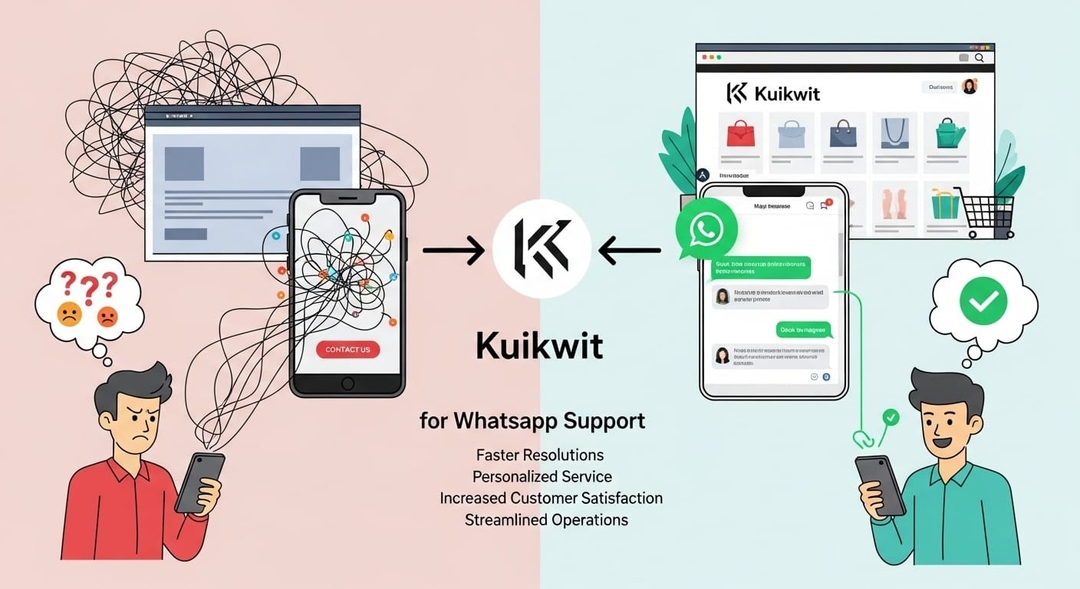
Kuikwit helps e-commerce brands manage WhatsApp, Facebook, and Instagram messages from one unified inbox. It improves response times, keeps customer conversations organized, and gives teams the tools to deliver faster, more consistent support.
Tag:
Published:
6 months ago
Updated:
6 months ago
Reading_time:
11 min read
What does e com...
How People Actu...
When E-Commerce...
E-commerce plat...
WhatsApp Busine...
Whatsapp busine...
Whatsapp Busine...
How Kuikwit wor...
Improved respon...
Analytics and r...
How to connect ...
Why is Kuikwit ...
FAQs
Tag:
Published:
6 months ago
Updated:
6 months ago
Reading_time:
11 min read
Nowadays, buyers tend to clarify their doubts before making a purchase, keep track of their orders even after they've placed them, and expect quick responses to their queries on the apps they are already using. That's exactly what Kuikwit is all about - a tool that supports online shops in handling customer conversations on WhatsApp and other platforms from a single location, without creating the usual confusion.
What is e commerce? E commerce refers to the act of promoting and selling goods or services online through various digital platforms like websites, social media, apps, and messaging channels.
Is Kuikwit a good investment for online businesses? Absolutely, especially for those brands which receive messages on WhatsApp, Facebook, and Instagram and seek a single platform from which to manage these.
What does Kuikwit do? Kuikwit links your WhatsApp Business phone line through the WhatsApp API and imports your customer interactions into a single inbox where the team can reply, allocate conversations, utilize message templates, and monitor performance.
What does e commerce mean
At first, the concept of e-commerce seems straightforward: selling products online, receiving digital orders, connecting with customers over the internet, and so on. That's only the tip of the iceberg though. A business that sells products online encompasses product exploration, various customer interactions, support, order status updates, payment follow-ups, and customer loyalty. It's not a one-off event. It's a series of moments that each play a role in the customer's decision. And if one of these moments feels delayed or disconnected, the customer's entire experience negatively impacts. In fact, a customer may fall in love with a product, yet they will still walk away if no one answers their simple question promptly. This kind of thing is happening more than brands want to admit. Thus, communication can no longer be considered as some sort of peripheral task but it needs to be embedded right within the sales funnel.
Here is where Kuikwit naturally finds its place. The entire premise of the tool is not about transforming the entire business model but rather it is about reinforcing that portion of business which most companies do poorly — customer conversations. Meaning, rather than letting conversations flow freely among disparate apps and devices, Kuikwit gives the team one window through which they can make sense of what is coming in and who will respond. Sure, it sounds like operations. But it does have a direct impact on revenues, trust, and how quickly people progress from “I’m interested” to “I’ve placed the order” stage.
How People Actually Buy Online Today

What is e commerce if we remove the jargon? It is customers buying online in the manner they find most convenient. Sometimes through a website. Sometimes through Instagram. Sometimes through a WhatsApp message that begins with “Hi, is this still available?” That is the part many brands overlook. Customers do not care about the internal procedures. What matters to them is the ability to get their question answered clearly without having to repeat themselves multiple times through different apps. They want convenience. Quick responses. Feeling that the business is genuinely attentive.
That is why an up-to-date online business cannot be just a storefront. It should come with a communication arrangement which is in sync with the current ways through which people shop. Kuikwit supports this by centralizing WhatsApp, Facebook, and Instagram messages into one dashboard. The staff will no longer have to keep switching from one app to the other. They are capable of observing the conversations in a single place, assigning them, responding quickly, and ensuring that the business keeps moving forward. That changes the perception of the business. It seems better organized. More on the ball in terms of response. Less disorderly behind the scenes.
When E-Commerce Growth Starts Turning Messy
At first, it seems like e-commerce is constantly growing but it is becoming disorganized even faster. One individual can handle all tasks from a mobile phone at the very beginning. A few Instagram DMs. A few WhatsApp orders. Some Facebook messages. It does seem easy to manage. Then the volume increases. The ads begin working. More products get listed. More people are asking questions. Then no one knows who the customer answered is, who is the one still waiting, who asked about the return and who is ready to buy. The lead management process is totally messed up. Besides, the sales are being lost due to this low-level incompetence.
Kuikwit is a bang on solution because it directly tackles this type of disorder. It gives companies a unified inbox where all those conversations can be managed at one place. Even better, the chats can be allocated to members of the team, answered through use of canned replies, and the follow up can be organized so that confusion caused by several people using different apps disappears altogether. It effectively segregates the whole communication into a system. And a system is what holds a business going through a heavy traffic up to its feet rather than seeing it fall apart because of the pressure.
E-commerce platform
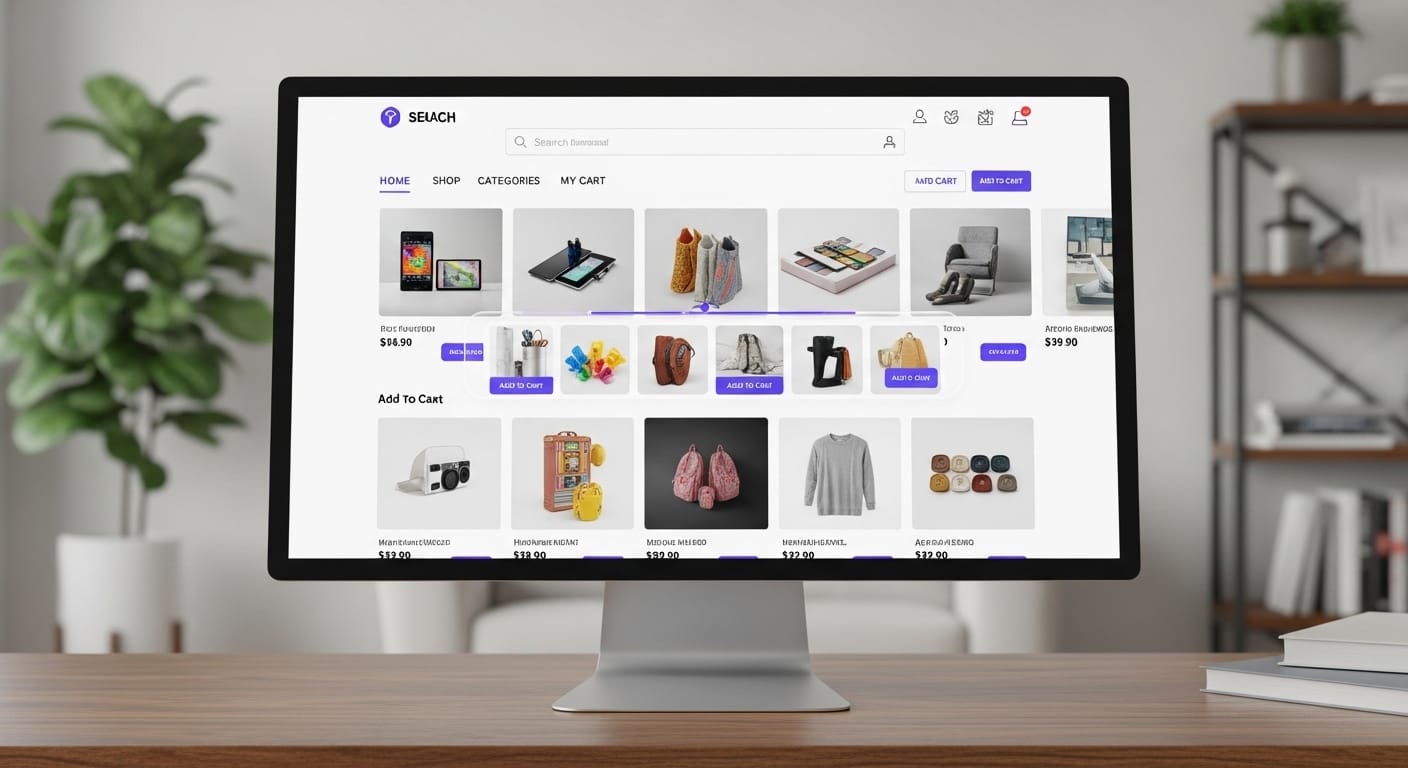
When asked about an e-commerce platform, most people's minds jump to the words: website, product pages, shopping cart, and payments. Totally fair. Those go hand in hand with the topic of discussion. But if the platform's experience ends at the checkout stage, then it is incomplete. The real life selling of the product goes far before the sale and way long after it as well. Customers inquire about stock, delivery, product fit, custom options, returns, payment confirmation, and shipping delays. Once these back and forths are done rather poorly, the looks of the store may be on point but it may still be very weak in the areas that really count.
This is a major reason why Kuikwit performs very well as a component within a larger e-commerce platform framework. It turns into that layer of communication capable of supporting the store. The product page attempts to handle some of the customer questions. Kuikwit finds room for all the other ones. Customers communicate through their preferred channels such as WhatsApp, Facebook, Instagram, and the business is able to do the same through a single connected system. A homepage remodeling may get you some hits but the kind of fixes that actually result in higher conversion are the more practical ones.
WhatsApp Business Solutions for E-commerce
WhatsApp Business Solutions for E-commerce are important because the customer is already on WhatsApp where they feel the most comfortable speaking with others. Customers make instant queries. They can send pictures. They discuss order details. Even after buying customers get in touch through WhatsApp. So, for a majority of the product-based businesses, WhatsApp is not just a channel among many for them, but it is where the decision-making process of the customer occurs. If the messaging is not up-to-date, the sale stops at that point. But if the messaging is quick and accurate, the customer will feel even more confident in the purchase.
Kuikwit makes this easier by connecting your WhatsApp Business number directly through the WhatsApp API to its platform. Once connected, customer messages from WhatsApp appear instantly inside Kuikwit’s unified inbox. That means the team can handle WhatsApp support without juggling devices or switching accounts. It also means those WhatsApp conversations can sit alongside Facebook and Instagram messages in the same dashboard. This is a big deal for businesses that advertise on multiple platforms and do not want support to become fragmented. Kuikwit turns WhatsApp into part of a structured workflow, not just a loose chat feed.
Whatsapp business
Customers have very high trust in WhatsApp making it an extremely effective sales or communication channel for online retailers. However, it is important to keep in mind that with an increasing number of users, WhatsApp may eventually require additional organizational features to help companies manage customer communications effectively. This is where Kuikwit comes into play. Kuikwit's chat tools enable teams to quickly respond via AI auto-replies and saved response templates. So instead of every response beginning at zero, companies can go at a quicker pace while maintaining a more consistent voice or tone. It not only saves time but, more importantly, it leaves customers with the impression that they are being cared for and not just ignored.
Whatsapp Business Account And Kuikwit
A standalone WhatsApp Business account can be quite handy, and when paired with Kuikwit for WhatsApp Business API integration, it becomes an extremely powerful tool. The main difference comes down to scalability and control. As soon as your WhatsApp Business number is integrated with Kuikwit, it does not mean that messages are confined within a single app on a single device anymore. Instead, they build up to a complete and centralized system for customer communication. Anyone with a need for visibility gets it, and anyone needing to perform an action can do it from one and the same location. This substantially eliminates many of the self-induced obstacles that businesses put in their own way.
Kuikwit enhances response times because it focuses on collaboration. Customer service agents can see new incoming chats, reply via the unified inbox, assign conversations to other team members, and also make use of tools that help minimize manual work. Kuikwit in addition provides WhatsApp conversation analytics and reporting like response time, customer satisfaction, and agent performance. This is crucial, as good customer support should not be just guesswork. Companies should be capable of seeing what is helping and what is hindering them. Kuikwit provides that insight which is especially relevant to the running of e-commerce.
How Kuikwit works inside a real online business

The simplest way to figure out Kuikwit is to picture a small or a developing online brand that is getting customer messages from various sources. A customer makes an inquiry about the size of a piece of clothing via Instagram. Another customer wants to know the details of the delivery through WhatsApp. A third customer sends a Facebook message, asking whether cash on delivery is available. If there is no central management tool, all these interactions will remain scattered. The team will have to keep switching between different platforms, try to remember the context of the conversation, and hope that they do not miss anything. That is the very point where errors happen. Sometimes they might be minor. Sometimes they could be quite costly.
With Kuikwit, these messages are brought together in a single dashboard. With such an arrangement, the team can see all the conversations at once without changing applications. They can carry out chat assignments within the team, respond to customers swiftly, and keep the discussion flowing uninterrupted. Customers will not have the impression that they are dealing with three separate businesses on three different platforms. Everything is smoother since the team members operate on the basis of one common view. This is more than just offering better support. It is delivering a superior brand experience.
Improved response times and better customer experience
Fast replies are important in online commerce because hesitation shows up very fast. A customer waits too long, gets distracted, finds another seller, or simply changes his mind. The product may still be good. The price may still be fair. But the moment passes. Kuikwit supports reducing that delay by equipping teams with tools that enable handling customers faster. AI-assisted auto responses can help in the conversation continuation. Template responses ensure minimum retyping. Agents get to focus only on scenarios where their judgment is needed after all.
These aspects quite significantly alter the customer's perception of the company as well. Customers look for channels that are familiar to them and ones that do not require a lot of effort from them. They want the business to not make them chase for simple updates. Kuikwit by integrating WhatsApp into a well-organized support flow, enables businesses to respond in a way that feels fast and consistent. This consistency is very significant as it is this that makes the business seem more reliable to the customer. Not perfect, just reliable, which is usually what the customers want the most.
Analytics and reporting that actually help
A lot of businesses say they want better support, but they don’t track anything meaningful. They don’t know average response time. They don’t know which channels are busiest. They don’t know which agent is overwhelmed or which templates are helping. Without that visibility, improvement stays vague. Kuikwit solves part of this by offering analytics and reporting on WhatsApp interactions. Businesses can track response times, customer satisfaction, and agent performance from one platform.
That kind of reporting matters more than it sounds. It helps teams stop relying on impressions and start using data. Maybe Instagram messages are slow. Maybe WhatsApp converts better. Maybe one shift is underperforming. Maybe templates reduce delays but need a more natural tone. Those are useful discoveries. They help businesses improve support without guessing. And when support improves, sales and retention often follow.
How to connect WhatsApp with Kuikwit
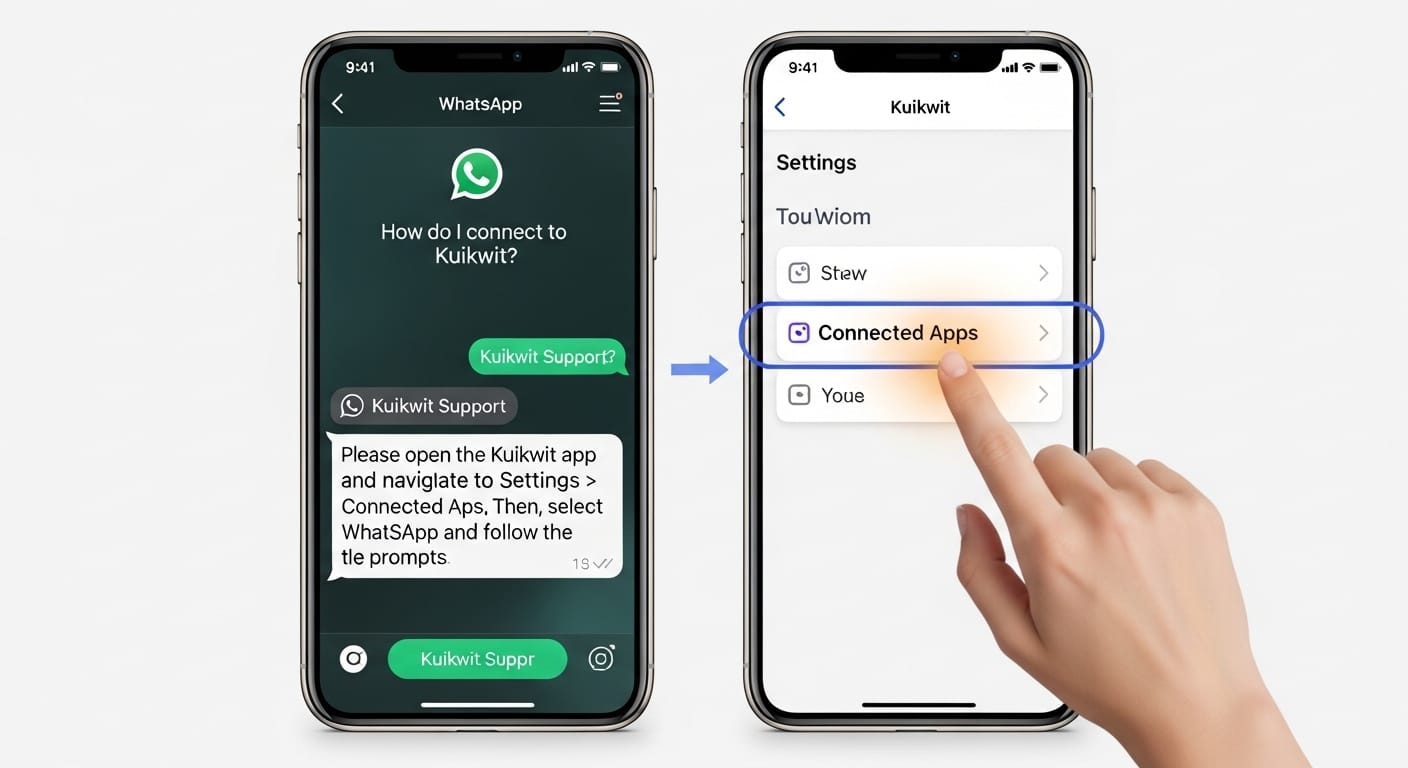
Setting up WhatsApp with Kuikwit is a breeze and since no one would want turning a support upgrade into a technical nightmare, this is a pretty important piece of the puzzle. If you want to connect WhatsApp with Kuikwit, in the Kuikwit panel go to Settings, select Channels from the left menu, then pick WhatsApp and follow the instructions to link your WhatsApp Business number. Finish the modifications by authorizing and connecting the account as is directed. Once everything is done, you will be able to see all WhatsApp messages inside the Kuikwit unified inbox.
That kind of straightforwardness really is what counts. Typically, businesses do not shun enhancement because they dislike the end result. They shun it because the thought of the set-up sounds irritating. Kuikwit removes this obstacle by giving a straight road to connect. Instead of a drawn-out migration saga, the business can move to a more organized communication system without complicating things.
Why is Kuikwit a better match for modern e-commerce than scattered tools
Modern selling online is quite a messy business (quite unlike the good old days when it was pretty straightforward). For example, a customer may see a brand on TikTok, ask a question on Instagram, proceed to WhatsApp, and place an order only after one last conversation. This is the type of journey that has become the norm now. So any business which keeps different support channels separated is actually making life more and more difficult for itself. The customer journey is cross-channel now and the team’s workflow thus also needs to catch up.
Kuikwit suits modern e-commerce because it recognizes that this is actually how the customer behaves nowadays. Rather than confining everything within one interaction style, it allows for communication to come in from WhatsApp, Facebook, and Instagram, centralizes them and then provides the team with tools for proper management. Therefore, it is especially beneficial for those brands which are involved in social selling, running paid ads, handling numerous DMs, or looking for a better support framework without having to go in for a complicated custom system. Kuikwit changes communication from chaos to an organized operational layer and infact this is exactly where most online businesses are the weakest.
FAQs
What is Kuikwit? Kuikwit is a platform for communication with customers that unifies main messaging channels such as WhatsApp, Facebook, and Instagram into one single inbox so the team can manage all conversations from one dashboard.
How does Kuikwit help e-commerce businesses? Kuikwit supports in centralizing customer communications, speeding up replies, assigning conversations to team members, facilitating the use of templates and automations, and providing analytics to measure performance.
Does Kuikwit connect with WhatsApp Business? Kuikwit does. Kuikwit links your WhatsApp Business phone line straight through the WhatsApp API that results in customer messages getting displayed in their unified inbox instantly.
Why is WhatsApp important for e-commerce support? Because the customers are already daily users of WhatsApp making it very familiar and convenient for them. This is the biggest advantage as it can be used for pre-sale inquiries, order tracking and supportive chatting.
Can Kuikwit improve response times? Definitely. Kuikwit features AI-assisted automated responses along with pre-created reply formats and running the support team can produce accurate and timely responses.
What channels can be managed inside Kuikwit? According to the configuration you have given, Kuikwit integrates messages from WhatsApp, Facebook, and Instagram into one unified platform.
Does Kuikwit offer analytics? Kuikwit certainly has the option of analzying and reporting on WhatsApp interactions, which include response times, customer satisfaction, and agent performance.
How do I connect WhatsApp with Kuikwit? The process involves accessing the Kuikwit dashboard, going to Settings, opening the Channels section, selecting WhatsApp and then following the instructions to connect and authorize the WhatsApp Business number.
So basically, to be able to convey the point of Kuikwit most simply, it is that: Kuikwit enables online businesses to stop neglecting customer conversations as random side chores. Instead, it collects them in one place, especially through WhatsApp, and transforms that daily havoc into something more orderly, quicker, and easier to manage. In most cases, those are probably the things that growing brands need before any other thing.