Artificial intelligence is no longer a far-off idea. Its presence is felt in work emails, online shopping, business decision-making, and even the movies people watch for fun at night. What’s fascinating is how this change has been so silent. No dramatic event. Just slow incorporation. When people talk about intelligen ai, most of the time they mean systems that seem more clever than automation but are nowhere near the dramatic actors of science fiction. That is not to say the whole ide
Author:
pardeep kumar
Tag:
Published:
1 day ago
Updated:
1 day ago
Reading_time:
6 min read
01
AI Overview
02
Intelligent Age...
03
Co-Intelligence...
04
AI Artificial I...
05
AI Governance B...
06
AI Governance C...
07
AI Retail Intel...
08
AI Retail Busin...
09
Business-Specif...
10
Where Intellige...
11
FAQs (People Al...
Author:
pardeep kumar
Tag:
Published:
1 day ago
Updated:
1 day ago
Reading_time:
6 min read
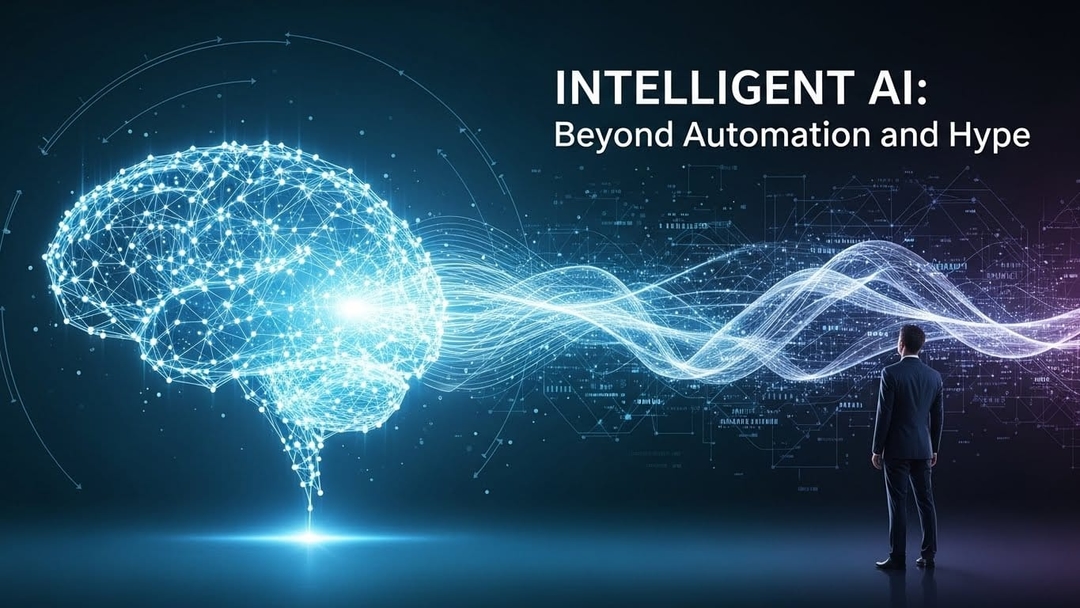
Artificial intelligence is no longer a far-off idea. Its presence is felt in work emails, online shopping, business decision-making, and even the movies people watch for fun at night. What’s fascinating is how this change has been so silent. No dramatic event. Just slow incorporation. When people talk about intelligen ai, most of the time they mean systems that seem more clever than automation but are nowhere near the dramatic actors of science fiction. That is not to say the whole idea is robot takeover. It is basically about tools that help, anticipate, and modify their actions, sometimes without anyone realizing it.
01 AI Overview
Today, a quick scan of AI equals an entirely new landscape compared with 10 years ago. The initial AI systems were mostly based on lots of rules made by humans, which made the systems very brittle and limited. Present-day AI, on the other hand, learns directly from the data. It identifies regularities, modifies outputs, and reaches a higher level of performance by repetitive exposure. This transformation enabled AI to extend its strategies into highly sophisticated areas such as language, vision, and decision support. It’s not reasoning like a human, but it’s no longer blindly following instructions either. That middle ground is where most real-world value now sits.
02 Intelligent Agent in AI
A concept of an intelligent agent in AI brings to mind less the mechanical parts and more the brains behind the decision-making software. These agents are constantly looking at the world through the lens of fresh data, figuring out what the signs mean, and then taking actions that bring them closer to their objectives. An intelligent agent is not only able to take the right steps but also to understand the feedback from its environment and learn from the interaction. Businesses are deploying these agents in stealth mode to take on roles such as lead conversation routing, workflow optimization, and security breach detection, often as part of broader all-in-one chat platforms that centralize communication and decision-making. They still need human thinking to be at their best, but they help in lowering the brainpower demand. Eventually, the duo become so familiar that the agents turn from tools into trusted collaborators in the eyes of humans.
03 Co-Intelligence: Living and Working With AI
Co-intelligence captures a very pragmatic, down-to-earth human–AI story. It emphasises that rather than replacing, the two partner in solving the problem. AI takes on the work-getting done and monotonous tasks while humans throw in the final touch with judgment and consideration. Writers co-author with AI, analysts check AI-generated insights for validity, and support teams use AI for handling inquiries while humans solve complex problems. There is no perfect marriage yet. There are fights. But the properly designed outworking of the partnership can yield results that are far beyond what either humans or machines can do alone. In fact, co-intelligence is so down-to-earth and practical that it has come to stay.
04 AI Artificial Intelligence Movie vs Real Life
People brushed off the AI artificial intelligence movie as fantasy with dramatic characters and emotional robots. It is however true that AI in reality is much quieter and less kind of self-aware. It does not have desires. It achieves goals that have been set by humans through data that these humans have provided. The reasons for failure are very dull, most of the times: biased data, unclear goals, or wrong assumptions. The awareness of the difference is crucial because it puts the blame on the right players. AI is neither the bad guy nor the good boy. It is just a mirror of the behind-the-scenes decisions and systems.
05 AI Governance Business-Specific Contextual Intelligence
AI governance is no longer just about ticking the compliance boxes. Now there's a far more prominent role for business-specific contextual intelligence. An AI system in retail presents a different set of risks than one that is implemented in healthcare or finance. The governance needs to be connect the dots. The context of the situation sets the level of permissible errors, defines what data is sensitive, and therefore, determines the extent of oversight required. Instead of one-size-fits-all policies, companies are putting together adaptable frameworks that recognize the world of their users. This innovative stance not only ensures that companies bounce back from their glitches, but also that the trust of the consumers is not compromised/decayed. Good governance is at its most effective when it is flexible, informed, and under constant revision.
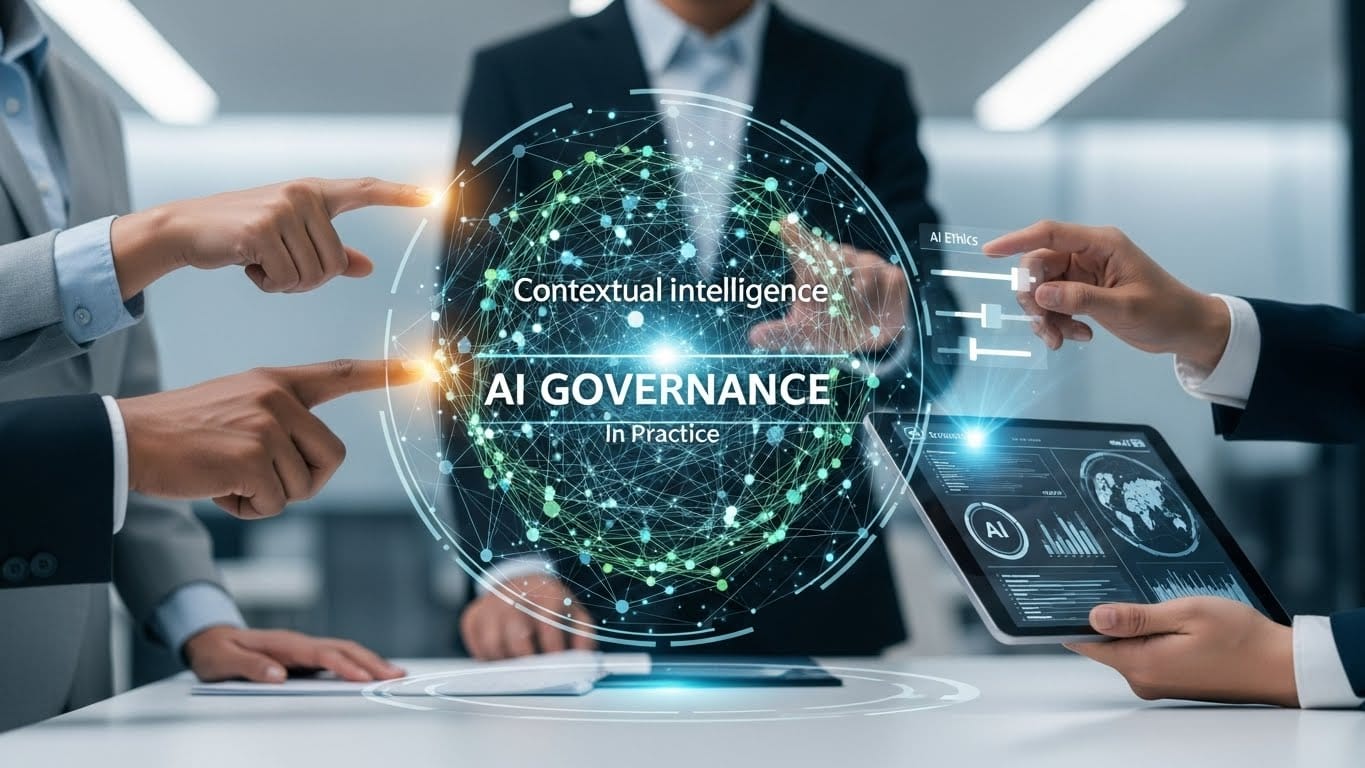
06 AI Governance Contextual Intelligence in Practice
Contextual intelligence is truly unleashed when governance develops hand in hand with the AI system. As the AI's abilities expand, the human control has to be even more thorough rather than more lenient. Without transparency, escalation, and human intervention, it is only a matter of time before problems arise. To consistently outperform their rivals, companies do not just treat governance as a box to tick. They make it an integral part of their business processes. Audits become frequent. Communication channels stay open. This method acknowledges that AI systems are essentially works in progress that can never be “finished products.”
07 AI Retail Intelligence
The essence of AI retail intelligence is to get to know customers' preferences not by guesswork, but by tracing their patterns. Purchase history, browsing habits, timing, and preferences all contribute signals. When the analyses are done responsibly, the intelligence garnered is used by retailers to trim their waste; they up their availability and smoothen the customer journey. The most excellent retail AI is not intrusive or ostentatious. The customers get the products they came for; the businesses foresee the demand. When intelligence is applied subtly, it builds loyalty without drawing attention to itself.
08 AI Retail Business Intelligence
AI retail business intelligence is not just limited to providing customer-facing insights. Furthermore, it has an effect on decisions related to pricing strategies, inventory planning, and supply chain. They are capable of modeling situations that humans are not able to calculate realistically. They don’t show the unavoidable, but what might occur. At the end of the day, it is the leaders who determine the course of actions. AI, however, that gives them a broader perspective. When crises happen, these instruments don’t offer certainty but rather clarity. This is an important difference as intelligence is there to assist strategy, but it cannot substitute it.
09 Business-Specific Contextual Intelligence in AI Systems
The often-quoted factor which explains the difference between a successful AI and the one that fails to implement is the context. It is hardly ever successful to copy models across different industries. Each business has its own unique set of factors such as limitations, risks, and expectations. Contextual intelligence refers to configuring the systems to real environments rather than theoretical performance. It also entails when a business decision should not be left to AI and hence human discussions are necessary. AI is at its highest when it gets the hard and fast limits to be observed. People, culture, and the business world are what draw these boundaries, not technology alone.
010 Where Intelligent AI Is Actually Headed
The next phase of intelligent AI will be less of a jump and more of a natural progression. It avoids getting noticed. Instead, the systems will be part of the workflows naturally rather than being an extra on top of them. Governance becomes a more flexible type. Co-working will become a bit of a norm. And intelligen ai won’t be just another thing businesses "adopt" but rather something that they build their entire business model around. The breakthroughs are never going to be through extravagant assertions but through useful everyday practices. Real change comes this way most often. Slowly, then all at once, then quietly again.
011 FAQs (People Also Ask)
What is intelligent AI in simple terms? It mainly refers to artificially intelligent systems that are capable of adaptation and decision-making based on their data with minimal human intervention.
How is intelligent AI different from automation? The major difference lies in automation merely carrying out the pre-set tasks, whereas intelligent AI changes its course of action according to the detected patterns and feedback.
Is intelligent AI safe for businesses? Yes, intelligent AI is safe for businesses if you have good governance, strong data, and continuous human oversight.
How does AI help retail businesses? AI facilitates retail businesses by giving better customer insights and forecasting, improved inventory management, and enhancing operational efficiency.
What is an intelligent agent in AI? An intelligent agent in AI is a generally autonomous entity that can observe the environment through sensors and act upon the environment through actuators, and it is capable of learning from the outcomes of its actions.
Secure and Reliable
Easy to use dashboard. Keep your worries aside! Have faith in Kuikwit’s strong security measures to keep your talks confidential while ensuring its data is not misplaced.