
Stay posted with kuikwit's informative posts
Omnichannel Support USA: Faster Replies, Higher CSAT
US customers jump from Instagram to WhatsApp to email fast. Here’s how omnichannel support keeps one thread, boosts CSAT, and cuts repeats.
Tag:
Published:
7 months ago
Updated:
3 months ago
Reading_time:
9 min read
Quick FAQ
Why Omnichannel...
What Is Omnicha...
Omnichannel Cus...
Omnichannel Con...
Omnichannel Str...
Omnichannel Ret...
How It Works In...
Common Mistakes...
Comparisons Tha...
Full FAQ (peopl...
Tag:
Published:
7 months ago
Updated:
3 months ago
Reading_time:
9 min read
Most US customers don't mind which channel you're using. What they want is seamless help. Omnichannel Support is simply that—a single connected support experience via WhatsApp, Instagram, Facebook, email, web chat, phone, or any channel you choose. The same context. The same customer. No telling the story for the third time.
Quick FAQ
What is omnichannel? It refers to your support channels being so well-equipped that the conversation and customer context can flow with them.
Is it worth it for US businesses? Usually, yes—since speed, consistency, and personalization have a direct impact on customer retention.
How does it work in real life? A customer initially contacts through Instagram DMs, then continues via WhatsApp and finally escalates to a call—without repeating the issues.
Why Omnichannel Isn’t Just “More Channels”
Omnichannel meaning is basically clear - but it is getting done that people mostly mess up. It simply means customers can change support channels without feeling that it’s actually different conversations. Not five separate ones. In the US, it’s quite common for people to expect things to go smoothly as it was with Amazon even if your company is small.
They will contact you via Instagram at night, expect a reply in the morning, and then call you during lunch. If your team is not aware of these previous interactions, customers get frustrated very fast. Omnichannel is essentially the practice of having shared context, a comprehensive customer history, and shared ownership across teams.
It’s not simply about “being on every platform”; it’s about being connected across them. To manage these multi-platform conversations effectively, teams must prioritize typing speed and accuracy, which remains the key to faster live chatand seamless transitions between channels. When agents can respond quickly and precisely, the omnichannel experience feels fluid rather than fragmented.
Many companies mistakenly equate this to just “we have chat and email.” That’s simply a multichannel. Omnichannel means the customer profile remains a unified one, the timeline is flawlessly maintained, and a handoff doesn’t feel like a restart. And yes—these can be reflected in your ratings, refunds, chargebacks, and repeat business.
What Is Omnichannel
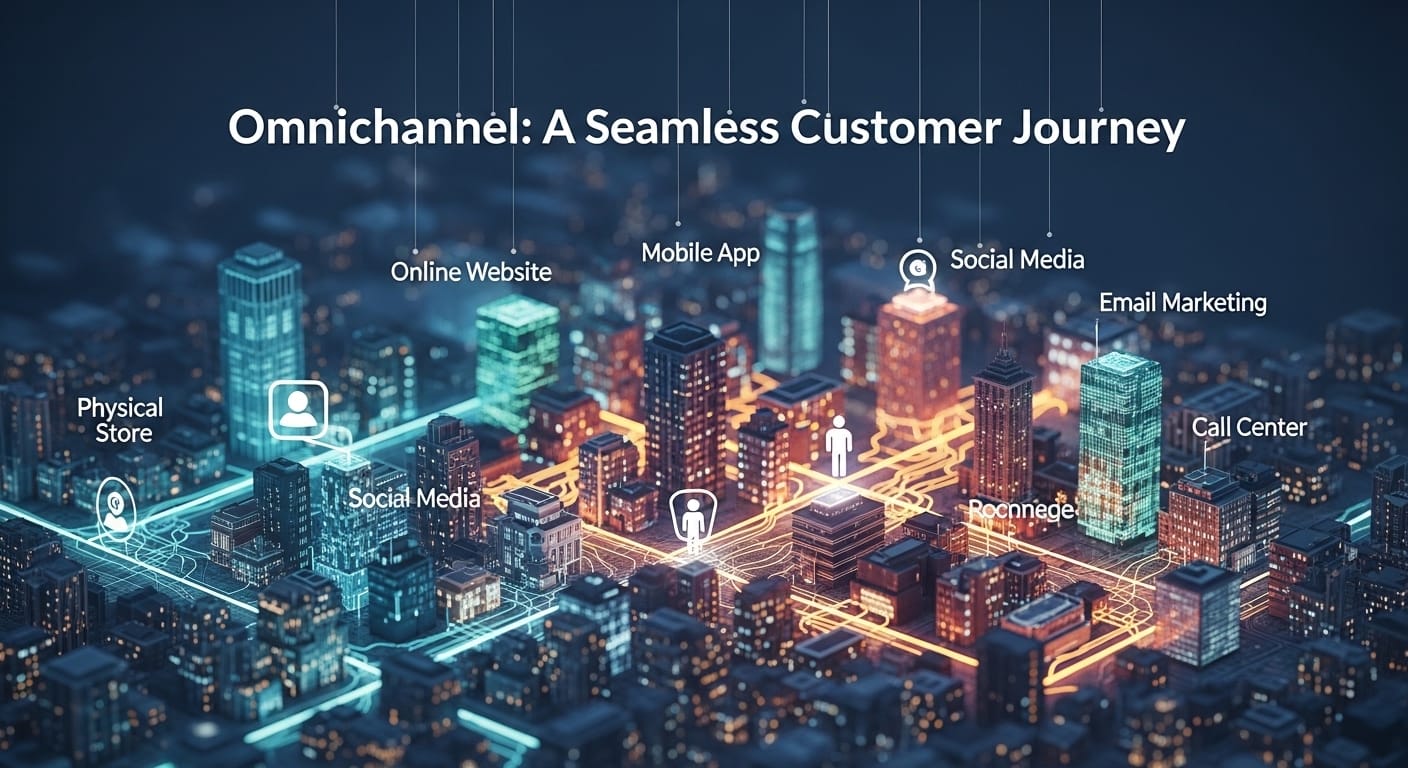
So, what is omnichannel in the chaotic, day-to-day world? It’s when your systems, staff, and workflows are designed to support channel switching smoothly without causing the experience to be broken. A customer may ask something on Facebook, then follow up on WhatsApp, then share an order ID via email with your team still being able to figure out the situation. No awkward “can you repeat what you said?” moment.
By handling the self-serve touchpoints one can support center articles, order tracking pages, automated status updates. If those are disconnected from your support team, you lose time. You also lose trust. Omnichannel isn’t a single tool; it’s a network. One source of truth. And really, if your data is scattered over five tabs and your agents copy messages all over the place… you’re not doing omnichannel. You’re doing chaos with extra steps.
Omnichannel Customer Service
Omnichannel customer service is where a plan takes shape. This is the part the clients can clearly experience. The personality remains uniform, and the data remains consistent across every touchpoint. By analyzing an omnichannel messaging case study, we can see how representatives gain a "single view" of the journey—seeing if a customer has already read a help article or chatted with a bot before stepping in to help.
In the US, customer service is also very much a part of brand identity. A luxury skincare brand cannot be robotic on email and casual on Instagram in a way that looks like it was by accident. A DTC clothing brand cannot have one policy on chat and a different one on phone. You need a shared playbook. Same resolution standards. Same escalation paths. Same refund rules. Customers may tolerate delays. They never tolerate inconsistency.
This is where a product like Kuikwit could play seamlessly, particularly for companies that primarily operate in social and messaging channels. It brings WhatsApp, Facebook, Instagram, and other chats into one inbox, so your team doesn’t have to be jumping around like it’s 2016. You get a single interface, intelligent routing, analytics, and the capacity to continue the conversation uninterrupted. It’s no magic. But it removes a lot of the friction that makes omnichannel seem “too difficult.”
Omnichannel Contact Center
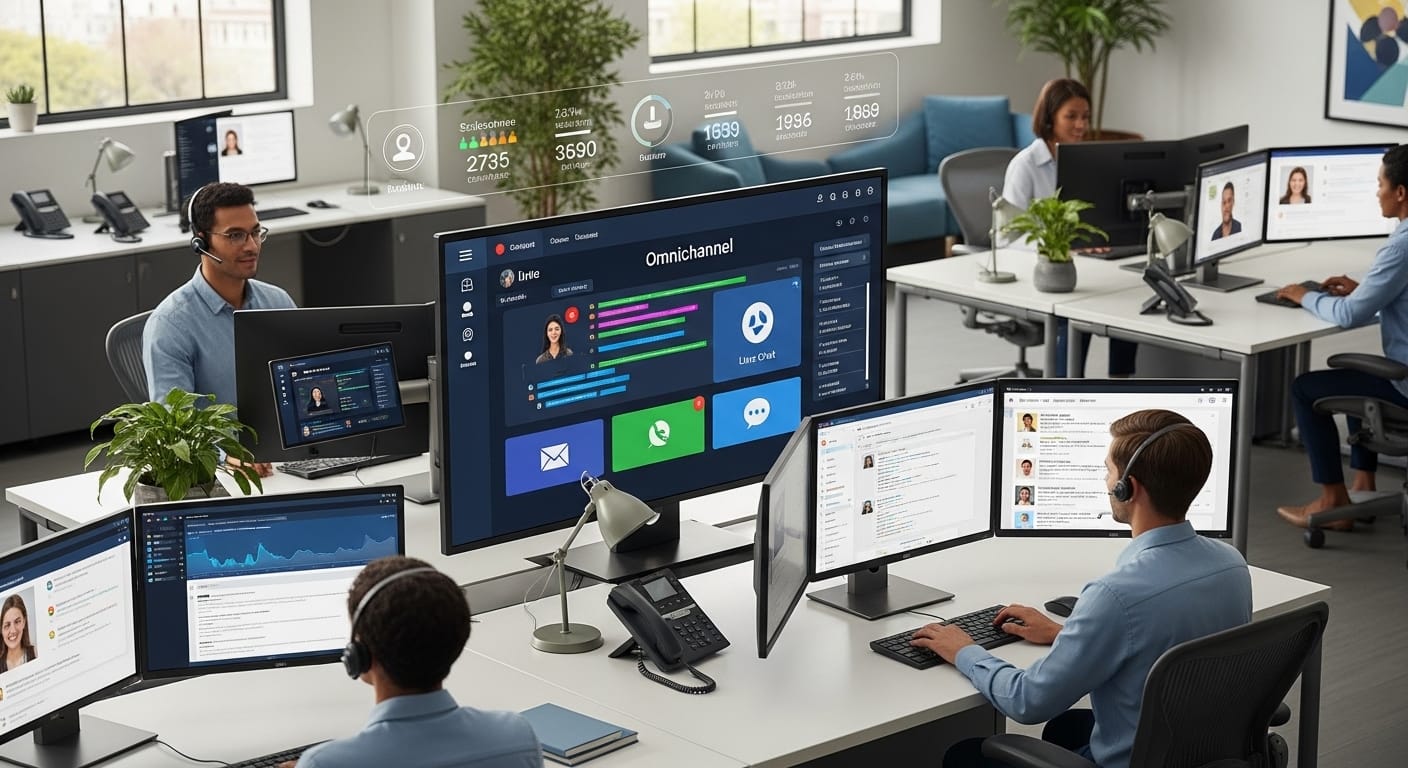
In the past, an omnichannel contact center signified phones plus email. That’s now old thinking. Across the USA, a “contact center” encompasses social DMs, text messages, live chat, review platforms, and sometimes even community forums. Customers have zero interest in whether these are run by different departments. They see one brand. So when your support channels are owned by separate teams with separate tools, the customer experience breaks. Hard.
Nowadays a contact center is basically one place where a team can take care of customers over multiple channels. Omnichannel customer service goes further than just serving customers. It also connects the team. Working in a unified manner results in less stress as well as fewer errors for the agents, making it a win-win situation.
One of the major advantages here is the sanity of the agent. US support teams get burnt out very quickly when they have to handle too many tabs. Switching between different tools is not only a productivity killer but also a quality killer. If your agents are missing pieces of the context, they start guessing.
If they guess, you get mistakes. If you get mistakes, you get refunds. And then angry reviews. A connected contact center silences those issues. Not perfectly. But noticeably.
Omnichannel Strategy
An omnichannel strategy is not simply “turn on every channel and hope for the best.” In the US, that tactic normally ends up working against you because you create an availability expectation that cannot be met. Strategy means selecting channels that suit your audience, designing processes for them, and ensuring that context is shared across all your channels.
Another good strategy: treat your customer support like a journey. Begin with self-service, then chat, then human agent, then escalation. But the conversation should not be interrupted. For instance, if a customer starts with an AI reply at midnight, your agent gets to see that in the morning.
Customers really dislike having to repeat themselves over and over again. It’s a minor inconvenience, but there are quite a few people who find it very annoying. You also want to prepare for “channel mismatch.” Some issues should only be discussed in a secure environment (e.g. account changes, payment issues). Others can be fine on social. Channel shifting, when done correctly, can even be very helpful.
Here’s a simplified way that often helps teams align:
Omnichannel Retailing
"Omnichannel retailing is often the source of greatest support pressure. Retail customers not only ask questions, but they do it while shopping, after buying, and even while complaining. To manage these high expectations, many brands are turning to real-time customer engagement tools to bridge the gap between social media and direct support."
That’s why people make public comments when they’re upset. This in turn becomes support and reputation management all at once. Retail omnichannel is also closely connected to inventory, shipping, and returns. Customers want to know: “Will this fit?” “Can I change my address? ” “Why is the tracking stuck?”
With a connected setup, your team can reply quickly and clearly to inquiries without needing to check with several departments first, thus avoidingagre by delaying or issuing vague replies. Retail also gains from proactive messaging. Shipping updates. Delay warnings. Back-in-stock alerts. Return status notifications. When your supply chain pings are integrated into your communication system, you will reduce the volume of incoming requests. The less inbound your agents get, the more they will be able to spend time on the complex issues that really need humans. That is the silent benefit of omnichannel in the retail sector: it reduces total chaos, not merely repetition.
How It Works In The Real World (Without Making It Complicated)
Making real-world examples functionally joined up is usually more straightforward than you think. So if a customer writes you on Instagram to ask about the size of your product and you reply.
You then receive the order. You want to change the delivery address on WhatsApp. You want to return the product via e-mail. If you don't connect these stages, it will seem like constantly starting over at every step.If these stages are connected, the brand will appear well-organized. Calm. Reliable.
Backstage actions are things like a customer messaging a company to book a home maintenance service, then sending the documents over via email, and then calling the company. Such channel switching is pretty standard, and the point is whether your team is ready for it.
US consumers simply won't stay mad after they have been treated to a good customer services experience, and they are likely to be more forgiving and even to find charm in the little imperfections of the store. In B2B SaaS, the communication might start on the live chat, then move to email, and finally lead to a Zoom call.
Support, success, and sales might all touch it. If the conversation history is broken, you lose trust. If it’s unified, you look competent. Even when the issue is messy.
Common Mistakes (The Stuff That Quietly Ruins It)
The first mistake is opening too many channels without staffing for them. If you add WhatsApp but reply after 18 hours, you didn’t improve support—you created a new disappointment. Another mistake is automation without escape routes. Auto-replies are useful, but customers should be able to reach a human when needed. Otherwise it feels like a wall.
A big one: inconsistent policies. If one channel says “yes, we can refund,” and another says “no,” customers don’t think “oh different departments.” They think you’re dishonest. In the US, where reviews spread fast, this becomes a brand issue, not just a support issue.
And honestly, the most common mistake is treating omnichannel as a tool purchase. Tools help. But the real work is your workflows, training, and voice guidelines. If those don’t exist, the platform becomes an expensive inbox.
Comparisons That Help Decision-Makers
Reach without continuity often increases workload because agents must piece together fragmented conversations. Conversely,omnichannel continuity tends to reduce workload over time, especially when paired with self-serve content and smart routing. When evaluating omnichannel vs. multichannel strategies, it is important to remember that a unified experience allows customers to switch platforms without repeating their issues.
Also, not every business needs every channel. Retail brands usually need social + messaging. B2B might lean on email + chat + phone. The right move is to match channels to customer behavior, then connect them, then improve consistency. That order matters.
Full FAQ (people also ask)
1) What’s the difference between omnichannel and multichannel support?
Multichannel means you offer multiple channels. Omnichannel means those channels are connected so context carries over and customers don’t repeat themselves.
2) Which channels matter most for US customers right now?
It depends on your industry, but social DMs, SMS, email, live chat, and phone are common. The “right” channels are the ones your customers already use.
3) Do small businesses in the USA need omnichannel, or is it just for big companies?
Small businesses often need it more, because one bad support loop can cost them a customer immediately. The difference is you start simpler and scale up.
4) How do you measure if your support experience is actually connected?
Look at repeat contact rate, first contact resolution, and how often customers have to re-verify details or restate the issue across channels.
5) What role does AI play in modern customer support?
AI is best used for common questions, routing, tagging, and suggested replies—basically speeding up humans, not replacing them.
6) Is a unified inbox enough to claim omnichannel?
Not really. A unified inbox helps, but you also need unified customer profiles, shared workflows, and consistent policies.
7) How does omnichannel support improve retention?
Customers feel remembered, get faster resolutions, and face fewer frustrating repeats. That reduces churn, especially after high-stress issues.
8) What’s the biggest implementation challenge for US teams?
Usually, disconnected tools and inconsistent workflows. Training is a close second—especially when multiple teams handle different channels.
9) How does self-service fit into an omnichannel approach?
Self-service should connect to live support. Agents should see what the customer already read or tried, so the customer isn’t stuck looping.
10) What should a business set up first before expanding channels?
Start with clear policies, a consistent brand voice, and basic routing rules. Then connect your most-used channels before adding new ones.
And yeah, that’s the whole thing. The goal isn’t to be everywhere. It’s to feel consistent wherever the customer shows up. After that, it becomes routine. Messages come in, the thread stays intact, your team stays calmer… and it kind of just runs.